
 Skip to content







Okay, so you've done the hard part. You found the one. Now you just need to find the ring. Easy, right? Well, until you get to the metal question.
We get it. And we're here to help.
The good news? There's no wrong answer. The better news? Once you understand what actually separates these two metals - not just "platinum is more expensive", the choice usually becomes pretty obvious, pretty fast.
First, What Are You Even Choosing Between?
Platinum is a naturally white metal used in jewellery at about 95% purity. No blending, no coating, no tricks. It's platinum all the way through, and it looks exactly like itself from day one to day forever.
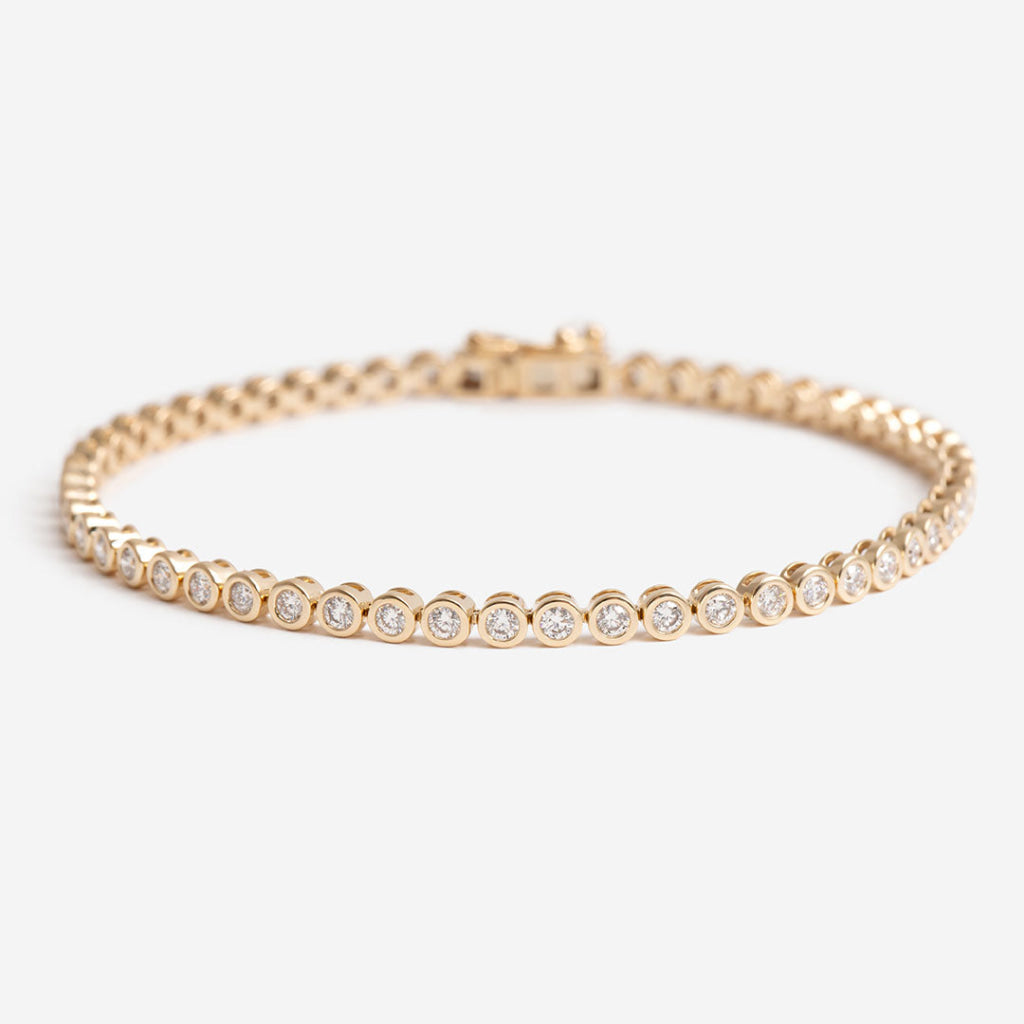
18ct yellow gold is 75% pure gold, alloyed with silver and copper to give it strength (pure gold is actually too soft for everyday wear — who knew). That 75% gold content is what gives it its rich, warm, unmistakably golden colour. And yes, it's had a serious glow-up in popularity lately. Yellow gold is having a moment, and honestly, it deserves it.
Two great metals. Two very different vibes. Here's how they stack up.
The Price Gap Is Real. Here's What's Behind It
Let's not dance around it: platinum costs more. More at the point of purchase, and more every time it needs to be worked on — resizing, repairs, repolishing — because it's denser and requires more specialist skill to handle. It's not a markup for the sake of it. It's just a heavier, rarer material that takes more to work with.
18ct yellow gold, on the other hand, gives you a genuinely luxurious, high-quality metal at a price that leaves room in your budget for, say, a significantly better diamond. And since the diamond tends to be the thing everyone notices first, just saying, that's not nothing.
So if budget is a factor (and for most of us, it is), yellow gold lets you put your money where the sparkle is. If you want the finest metal available full stop, and the extra investment doesn't keep you up at night, platinum is absolutely worth it.

Rarity: Platinum Is Rare Rare
Here's a fun fact to drop at your next dinner party: all the platinum ever mined in human history would fit into a room the size of your living room. Seriously. It's one of the rarest metals on earth, mined primarily in South Africa in quantities that make gold look abundant by comparison.
Gold is precious, and 18ct yellow gold is genuinely valuable stuff — 75% pure gold is no joke. But platinum carries a scarcity story that gold simply can't match. For some people, that matters. The idea of wearing something the earth produces in such small quantities adds a layer of meaning that goes beyond aesthetics.
For others? They just want the ring to look incredible. Also completely valid.
How They Age. This Part Really Matters
Both metals age beautifully. But they age differently, and knowing what to expect is kind of important when you're committing to wearing something every day for the next several decades.
Platinum develops a patina over time. A soft, slightly frosted lustre that replaces the mirror-bright finish it has when new. A lot of people genuinely love this look. It gives the ring a natural, lived-in quality that feels earned. If you prefer to keep the original shine, a professional polish will sort that out no problem.
Here's the thing about platinum scratches that most people don't know: the metal doesn't actually disappear when it gets scratched — it displaces. It moves to the side of the scratch rather than being lost. That means a skilled jeweller can polish it back to its original condition, without any loss of metal, indefinitely. For something you're wearing every day for life, that's a genuinely big deal.
18ct yellow gold ages in its own beautiful way. It develops a warm, gentle depth over time — subtle scratches accumulate into what jewellers call a satin finish, which many people find more characterful than a freshly polished surface. Unlike white gold, yellow gold needs zero replating. Its colour runs all the way through, so as it wears, it just keeps looking like gold. A little more storied, a little more heirloom-y. We're into it.
If you want to restore the original high shine at any point, a polish will do the trick. But plenty of people love how yellow gold evolves, and honestly, so do we.
“Engagement rings, on the other hand, are typically only given once an official proposal has been made”
Should Your Engagement Ring Match Your Wedding Band?
Short answer: ideally, yes. Here's why.
When two different metals sit on the same finger and rub against each other every day, they wear. And because platinum is harder than gold, it will — slowly, gradually, over years — wear down a gold wedding band sitting next to it. It's not going to be obvious next month, but ten or twenty years down the line? It'll show.
The simplest fix is to keep both rings in the same metal. A yellow gold engagement ring with a yellow gold wedding band looks cohesive, intentional, and beautiful. Same goes for platinum with platinum — clean, seamless, perfect.
Beyond the practical side, there's the aesthetic one. A matched set just looks like it belongs together. Two rings designed to be a pair, sitting flush side by side on your finger. It's a small thing that makes a big difference.
The good news is that most of our engagement rings have a matched wedding band designed to sit perfectly alongside them — your diamond advisor can show you the options when you come in.

Mohs Scale Of Hardness
So before you consider whether to go for softer gold than the more robust platinum, it’s worth making sure it will match your wedding bands.
The Mohs Scale of Hardness rates platinum as slightly higher on the scale at 3.5, rather than the lower 2.5 of gold.
When picking out the metal for your wedding ring, there’s just one rule: It must be of the same hardness as that of your engagement ring. This is so neither ring scratches the other.
If you for instance chose a platinum engagement ring and went on to decide on a platinum wedding ring, there’s a good chance of scuffing and scratching the gold wedding ring.
The Vibe Check (Yes, This Is a Section)
Okay, here's the real talk: yellow gold and platinum are two completely different aesthetics, and if your partner has strong feelings about jewellery, and most people do, they probably already know which one they want.
Platinum is cool, modern, and lets your diamond sit in a crisp, bright, silvery setting. It's the choice for someone who loves a sleek, contemporary look and wants the metal to feel almost invisible against the stone.
Yellow gold is warm, rich, and unapologetically romantic. It brings a depth and character to a ring that cooler metals can't replicate — and it has an heirloom quality that feels both timeless and very right now. (Seriously, yellow gold is everywhere at the moment. From sculptural solitaires to toi et moi rings to big, bold bands, gold is back, and it's not going anywhere.)
If your partner has been saving ring inspo on Instagram or Pinterest — and statistically, there's a good chance they have — take a look. The answer is probably already there, in a folder called something like "dream rings" or "future" that they definitely didn't mean for you to find.
So, Which One Is for You?
Here's our take, straight up.
Go platinum if your partner loves a cool, bright, contemporary aesthetic, has sensitive skin (platinum's high purity makes it the most hypoallergenic option out there), or simply wants the most enduring, low-fuss metal available. It's the choice for someone who wants the finest, full stop — and is happy to invest accordingly.
Go 18ct yellow gold if they're drawn to warmth, romance, and a look that feels both classic and completely of the moment. It's lower maintenance than most people expect, it ages gorgeously, and it gives you more to play with budget-wise when it comes to the diamond. For couples who love the idea of a ring with real character — something that feels like it could be passed down one day — yellow gold delivers every time.
Still not sure? Come in and try both on. Feeling the weight difference, seeing how each metal catches the light — it makes the choice in about thirty seconds flat.
We're here for it
Our diamond advisors at our Dublin City Centre showroom love this stuff. Genuinely. Come in, ask every question, try on everything, and leave with total confidence. No pressure. No jargon. Just people who really, really love jewellery — and want you to get it exactly right.
Book an appointment with us

