
 Skip to content


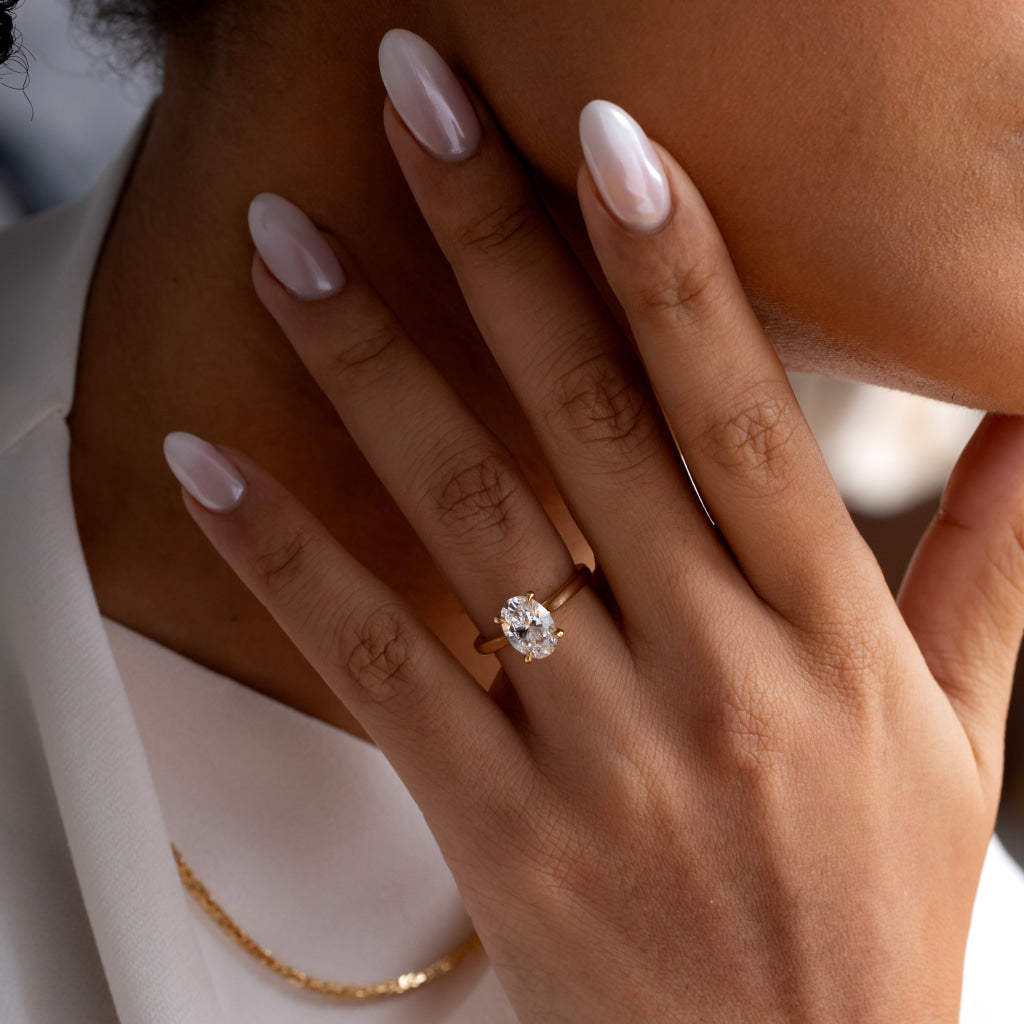
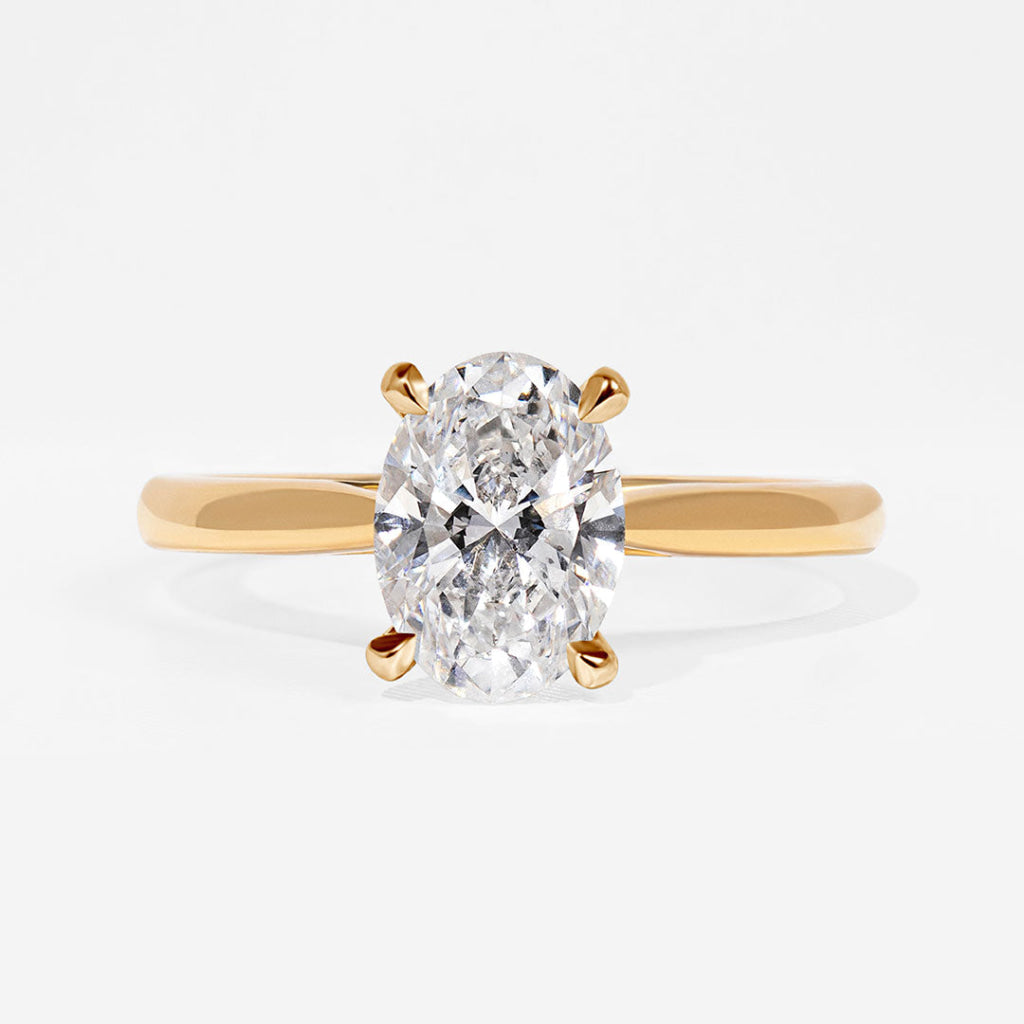





If you've started shopping for an engagement ring recently, you've probably already heard the term "lab grown diamond" thrown around and if you're anything like most of our customers, you've found yourself wondering: what's the actual difference? Are they real? Are they worth it? And why does one cost so much more than the other?
We get these questions every single day in our Dublin showroom, and we love answering them. So we've put everything together in one place - a proper, no-nonsense breakdown of lab grown diamonds versus natural diamonds, covering everything from colour and cut to cost and conscience.
First Things First: Are Lab Grown Diamonds Real Diamonds?
Yes. Absolutely, unequivocally, yes.
A lab grown diamond is a real diamond. It has the same physical, chemical, and optical properties as a diamond pulled from the earth. The only difference is where it was created. Instead of forming over billions of years deep in the earth's mantle, a lab grown diamond is created in a controlled environment using one of two processes — High Pressure High Temperature (HPHT) or Chemical Vapour Deposition (CVD). Both methods recreate the extreme conditions that produce natural diamonds, just in a fraction of the time.
Even the most advanced gemological equipment in the world can't tell them apart without specialist testing. They sparkle the same. They scratch the same. They are, by every meaningful measure, diamonds.
The 4 Cs.
Do They Apply to Both?
They do, and this is where it gets really interesting.
Both lab grown and natural diamonds are graded on exactly the same criteria — the famous 4 Cs: Cut, Colour, Clarity, and Carat. Whether you're looking at a diamond from a mine in Botswana or one created in a lab in the UK, the grading standards are identical. A GIA or IGI certificate for a lab grown diamond carries the same weight as one for a natural stone.
So when you're comparing the two, you're comparing like for like. A 1ct F VS1 lab grown diamond is graded the same as a 1ct F VS1 natural diamond. Which brings us to the big one...

The Cost Difference... and It's a Significant One.
Here's where things get really eye-opening.
Lab grown diamonds are typically 50–70% less expensive than their natural counterparts of the same grade. That's not a small saving — that's transformative. It means that a budget that might have stretched to a natural 0.7ct diamond could now comfortably buy you a lab grown 1.5ct stone in the same colour and clarity grade.
Why the price difference? It comes down to supply. Natural diamonds are finite. Mining them is an enormously complex, costly, and resource-intensive operation. Lab grown diamonds, on the other hand, can be produced in controlled quantities. As technology improves and production scales up, prices have dropped significantly over the past few years and that trend is continuing.
For couples working with a specific budget (and who isn't?), lab grown diamonds open up a whole new world of options. You can go bigger on the carat, better on the clarity, or put the savings toward a more elaborate setting or your honeymoon. The choice is yours.
Let's Talk About Colour
Diamond colour is graded on a scale from D (colourless) to Z (light yellow or brown), with D–F considered the top tier "colourless" range, and G–J falling into the "near colourless" bracket that represents fantastic value.
Here's something that surprises a lot of people: in terms of colour grading, lab grown diamonds and natural diamonds behave almost identically. You'll find lab grown stones available across the full colour spectrum, including beautiful near-colourless G–H stones that face up brilliantly white in a ring setting.
One thing worth noting — some lab grown diamonds produced via the HPHT method can occasionally show a slight blue or grey undertone. This is becoming less common as technology improves, but it's something to look out for. Always buy from a reputable jeweller who can show you the diamond's certificate and let you view the stone in person before committing.
For fancy colour diamonds — pinks, blues, yellows — lab grown options have also become far more accessible at a fraction of the cost of their natural equivalents. A natural pink diamond can run into the hundreds of thousands. A lab grown pink? A very different conversation entirely.
Clarity: Any Differences?
Both types of diamond can have inclusions (internal characteristics) and blemishes (surface characteristics), and both are graded on the same clarity scale from Flawless down to Included. Lab grown diamonds are not automatically cleaner or better — you'll find stones across the full clarity spectrum just as you would with natural diamonds.
That said, because you can stretch your budget further with lab grown, many couples find they can afford a higher clarity grade than they'd otherwise consider. Jumping from an SI1 to a VS2 — or even a VS1 — is very achievable when you're working with lab grown pricing.
Durability and Wearability. Is There a Difference?
Not one you'd ever notice in real life.
Both diamonds score a 10 on the Mohs hardness scale — the hardest naturally occurring mineral on earth. A lab grown diamond is just as durable as a natural diamond. It won't scratch, chip, or wear down any differently. For something you're planning to wear every day for the rest of your life, both are exceptional choices.
What About Resale Value?
We'll be straight with you here, because we think you deserve honesty on this point.
Natural diamonds have historically held more resale value than lab grown diamonds. As lab grown diamonds have become more widely available and prices have dropped, their resale value has followed suit. If you're buying a diamond as a financial investment, a natural stone is generally the stronger choice.
However — and this is important — very few engagement rings are ever resold. The vast majority of people buy an engagement ring to wear and treasure forever, not to flip. When you look at it that way, the resale question matters far less than the sheer joy of having the ring you love, at a price that doesn't stretch you uncomfortably.
The Ethical Question.
For many couples, this is actually the deciding factor.
Lab grown diamonds are often seen as the more ethical choice, avoiding the environmental disruption and complex supply chains sometimes associated with diamond mining. That said, responsible sourcing has come a very long way — today's natural diamonds can be traced back to their country of origin, and organisations like the Kimberley Process work to ensure conflict-free sourcing. At Gear Jewellers, we only stock natural diamonds from fully certified, ethical suppliers.
Both options can be ethical choices. It comes down to what matters most to you and your partner.
So, Which Should You Choose?
Honestly? There's no wrong answer.
If you love the romance of a diamond formed over billions of years, deep in the earth — there is genuinely something magical about that. Natural diamonds carry a sense of history and rarity that resonates deeply with a lot of couples.
If you'd rather maximise your budget and get the biggest, most brilliant stone possible — or if ethical sourcing is your priority — lab grown diamonds are a seriously compelling option. The sparkle is real. The quality is real. The savings are very real.
The best ring is the one that feels right to you.

Come and See the Difference for Yourself
Sometimes you just need to hold both diamonds side by side in the light. Our diamond advisors in our Dublin City Centre showroom are on hand to walk you through everything — no pressure, no jargon, just honest guidance from people who genuinely love what they do.
Whether you're leaning toward lab grown, natural, or haven't the faintest idea yet, we'd love to help you find your perfect diamond.
Book an appointment at Gear Jewellers →

